

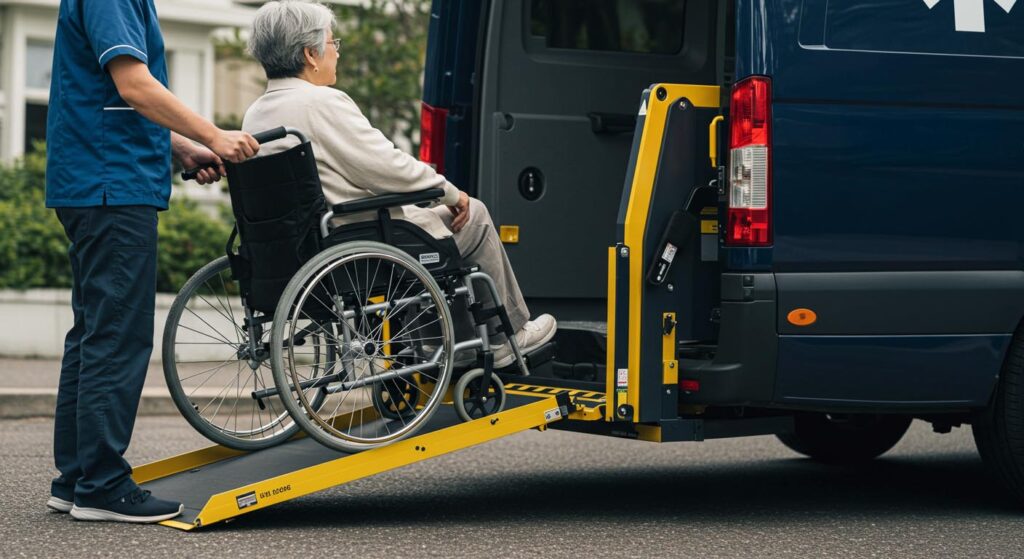
Wheelchair Transport Philadelphia services help patients with mobility limitations travel safely to medical appointments. In Philadelphia, Pennsylvania, these services support individuals who cannot use standard transportation due to medical needs.
Aero NEMT provides structured transport services across the city. As a result, patients can access healthcare consistently and without risk.
What Is Wheelchair Transportation?
Wheelchair transportation is designed for patients who remain seated in a wheelchair during travel. However, they often need assistance entering, exiting, and securing inside the vehicle.
Vehicles include ADA-compliant vans with lifts and secure restraint systems. In addition, trained drivers assist throughout the journey.
For a broader understanding, the “How Non-Emergency Medical Transportation Works in Philadelphia, Pennsylvania” blog explains how medical transport systems operate.
How the Service Works
The process follows a structured approach to ensure safety and reliability.
First, patients or caregivers schedule a ride with appointment details. Then, providers assign vehicles based on mobility needs.
Next, drivers arrive on time and assist with boarding. During the trip, patients remain securely positioned.
Finally, drivers assist with safe drop-off at the destination. Therefore, patients can attend appointments without stress.
Who Needs This Type of Transportation?
This service supports patients who cannot travel independently.
For example:
- Individuals who use wheelchairs for mobility
- Patients recovering from surgery
- Dialysis patients requiring regular visits
- Individuals with chronic medical conditions
In addition, patients without reliable transportation often depend on these services.
Benefits of Wheelchair Transport Philadelphia
Wheelchair Transport Philadelphia improves access to healthcare services.
First, it reduces missed medical appointments. In addition, it improves treatment consistency and supports patient safety.
Moreover, it reduces stress for caregivers. Therefore, patients receive more reliable care.
Wheelchair vs Stretcher Transportation
Different patients require different levels of support.
For example, wheelchair transport is suitable for seated travel. However, stretcher transport is required when patients must remain lying down.
The “Wheelchair Transportation vs Stretcher Transportation: Key Differences in Philadelphia” blog explains these differences in detail.
Medicaid Coverage and Eligibility
In Pennsylvania, Medicaid may cover transportation for eligible patients. Typically, patients must meet medical necessity and eligibility requirements.
Once approved, rides can be scheduled regularly for ongoing care.
For full eligibility details, the “Who Qualifies for Medicaid Transportation in Philadelphia, Pennsylvania?” blog explains the process clearly.
Transportation for Dialysis Patients
Dialysis patients often require transportation multiple times per week. Because treatment can cause fatigue, independent travel may not be safe.
Structured transportation ensures patients reach treatment centers on time. In addition, it provides safe return trips.
More details are available in the “How Dialysis Transportation Supports Chronic Kidney Disease Patients in Philadelphia” blog.
Safety and Compliance Standards
Transport providers follow strict safety guidelines.
Vehicles include secure restraint systems. In addition, drivers are trained in patient handling and safety procedures.
Furthermore, providers follow accessibility and privacy regulations. As a result, patients receive safe and reliable service.
Why This Service Matters
Wheelchair Transport Philadelphia plays an important role in healthcare access.
It reduces missed appointments. It improves treatment consistency. In addition, it supports patient safety and mobility needs.
Therefore, transportation becomes an essential part of healthcare delivery.Wheelchair Transport Philadelphia ensures patients can attend medical appointments safely and consistently. As a result, it supports better healthcare outcomes.
To schedule transportation or learn more, patients can contact Aero NEMT through the Official Website.